Bord Bia - Irish Food Board

The flavour shows where the best grass grows

Get cooking with beef

Thanks to an abundance of lush, green fields on the Emerald Isle, our amazing grass-fed beef is famed for its taste and quality. Here at Grasstronomy Farm we’d like to show you how to make the most of its natural succulence and luscious flavour. So we’ve put together a collection of tips for cooking beef. Enjoy.


Get cooking with beef

Roasting

  • Best cuts for roasting are rib of beef, rolled rib, sirloin, topside and fillet of beef.
  • For the best flavour and extra tenderness, make sure the beef is aged a minimum of three weeks.
  • Remove the meat from the fridge an hour before cooking.
  • A layer of fat mixed with mustard and freshly ground pepper spread over the roast keeps the meat succulently juicy and protects it from the heat.
  • Use a meat thermometer when roasting a joint – push the thermometer into a thick part of the joint without touching the bone:
    • For a rare roast, remove from the oven when the thermometer reaches 150˚F (65˚C).
    • For a medium roast, remove from the oven when the thermometer reaches 160˚F (70˚C).
    • When calculating the cooking time, allow time for the meat to be rested after roasting for at least half an hour. Try to slice it thinly so that you can enjoy the tenderness.

One of the glorious advantages of a roast beef dinner is that it lends itself perfectly to sticky, caramelised root vegetables and squash.

Roasting is a brilliant way to cook root vegetables as they’re robust enough to cope with the intense heat, and it draws out the most wonderful flavours. You can roast any root veg (even in the same tin as the beef) although it’s worth remembering that beetroot can stain. So if you’d rather not turn all the other veg pink, it’s probably best just to roast beetroot on its own. The other thing is to ensure all your vegetables are cut up roughly the same size, which will help them cook evenly.

Recipes for you to try:

Roast Beef & Yorkshire Pudding

Be inspirational this Christmas and treat those you love to a fabulously roasted joint of beef with all the trimmings. Nothing beats the King of beef roasts to bring family and friends together!

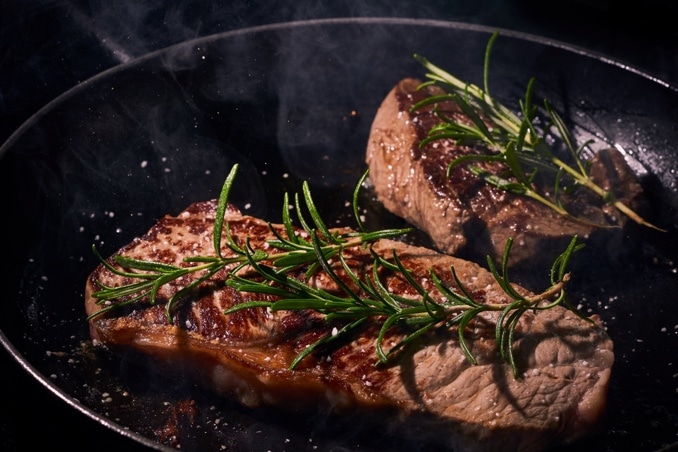
Grill / Pan Frying

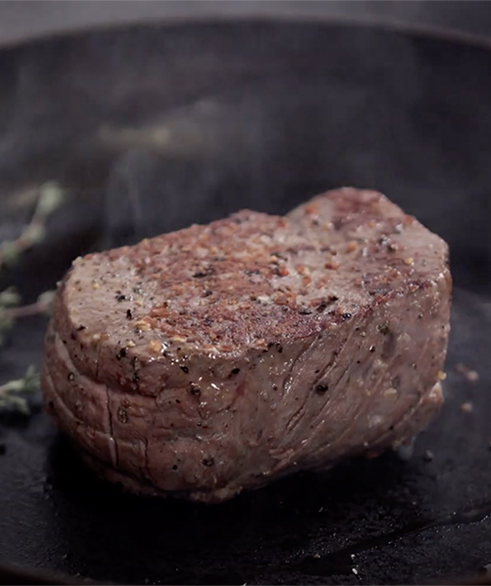
  • Best cuts for grilling or pan frying are sirloin, striploin and fillet.
  • For tenderness, use meat that has been well-aged (3 weeks).
  • Season well before cooking – a drizzle of olive oil, black pepper and balsamic vinegar will add extra flavour.
  • N.B. However, only add salt after the meat is cooked – adding it during the cooking process draws out all the juices, making the meat tough.
  • Heat the grill/pan to a maximum before adding the meat.
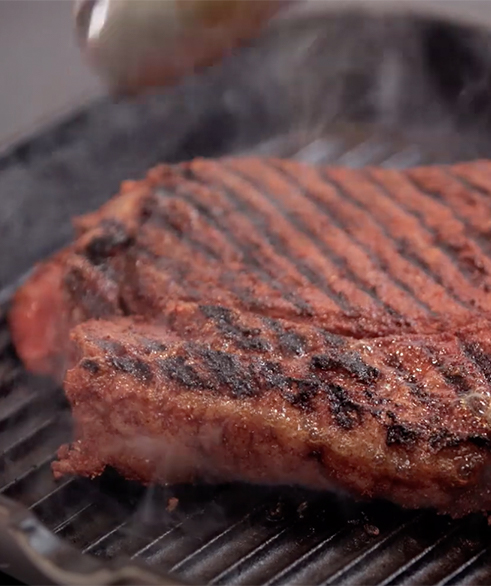
  • A cast iron ridged pan gives excellent results.

Recipes for you to try:

Steak with Grilled Vegetables

Succulent beef steaks and gorgeously sweet vegetables – you couldn’t ask for a more perfect combination. We like to add a splash of thick, honeyed balsamic vinegar – try it and find yourself in heaven!

Pot Roast or Braise

  • Best beef cuts for a pot roast or braising are top rib/housekeepers cut, silverside, eye of the round and brisket.
  • A pot roast or braising is a slow cooking method, using moist heat – perfect for bring out the succulent flavour of less expensive cuts.
  • Braising is best for serving-size portions, whereas a pot roast suits an entire joint.
  • Before braising or pot roasting, remember to seal the beef by browning it on all sides in smoking hot oil.

Recipes for you to try:

Traditional Pot Roast

What better way is there to fend off chilly weather than with this simple, yet heartwarming dish? A leisurely way of cooking beef, it’s ideal for entertaining dinner guests and makes the perfect family Sunday roast.

Stir Fry

  • Best cuts of beef for stir frying are sirloin, striploin, fillet and topside.
  • Heat the wok or pan until it’s very hot before adding the oil – this prevents the meat and other ingredients from sticking to the surface of the wok/pan.
  • Marinate the beef before cooking.
  • Stir-fry the vegetables first and remove, then stir-fry the beef in batches – return the vegetables to the wok and mix well.

Recipes for you to try:

Beef & Noodle Stir-fry

A lovely balance of flavours and textures for a quick no-nonsense yet healthy and tasty meal. This stir-fry beef supper is great for mid-week!

Barbeque

  • Keep raw food cool (at room temperature) and covered until you are ready to cook it – don’t leave it out in the sun.
  • Lightly brush the cooking rack with a little oil before cooking, to prevent the beef from sticking to it.
  • Have a spray bottle of water handy to put out any flames as they appear.
  • Try to scrape off most of any marinade before grilling, as this is what can cause the coals to flare up during cooking.
  • Always soak bamboo and wooden skewers in water for about 30 minutes before using, to stop them from catching fire!
  • Flat metal skewers for kebabs help to stop food from spinning as you turn them over. A good trick is to thread the beef on to pairs of parallel skewers, which will hold it firmly in place.
  • Try not to pack food on to a skewer too tightly – leave some gaps around each piece so everything can cook thoroughly.
BBQ beef cooking times

It’s tricky to give exact cooking times for barbecuing beef as it depends on the thickness of the beef (a 2.5cm/1” steak will take approximately the same time to cook through, whether it weighs 225g/8oz or 450g/1lb), but also on the heat of your barbecue, the distance of the rack from the coals and the weather (on a cold day things will take a little longer to cook).

The timings below are a rough guide for beef cooked over a medium-hot barbeque. (With steaks, it’s best to sear them first on each side and then continue to cook them to your liking).

2½-4cm (1-1½”) thick rump or sirloin steaks

Rare: 3-4 minutes each side
Medium: 5-6 minutes each side
Well done: 7 minutes each side

4-5cm (1½ -2”) thick fillet steak medallions

Rare: 4-5 minutes each side
Medium: 7-8 minutes each side
Well done: 8-9 minutes each side

2½-4cm (1-1½”) thick beef burgers

Rare: 3-4 minutes each side
Medium: 5 minutes each side
Well done: 6-7 minutes on each side

Beef kebabs

Allow 5-10 minutes, turning regularly

Large joints:

Cook over an indirect heat and allow 18-20 minutes per 450g (1lb). That’s 1 hour for a 1.25kg (2 ¾lb) rolled sirloin or cook until the internal temperature is 65˚C (150˚F).

When dealing with a large joint of beef, the easiest way of telling if it’s done to your liking is to push a meat thermometer into the thickest part.

Recipes for you to try:

Beef Burgers with Spicy Red Pepper Salsa

These beef burgers are so simple to make and when served with a colourful salsa, they make a fresh and healthy meal. We think the soy sauce and chilli add an extra zing!

Casserole

  • Best beef cuts for a casserole are the neck, chuck, shoulder and shin.
  • Whether on the stovetop, or in the oven, casseroles are perfect for the least tender cuts of beef, as the meat is slowly and gently cooked in liquid.
  • Before adding any other ingredients, brown the beef in smoking hot oil to seal in the juices.

Recipes for you to try:

Beef Casserole with Cranberries & Port

A classic beef casserole recipe, but made extra festive with cranberries and port. Best of all, you can prepare this dish ahead and freeze it for another time.